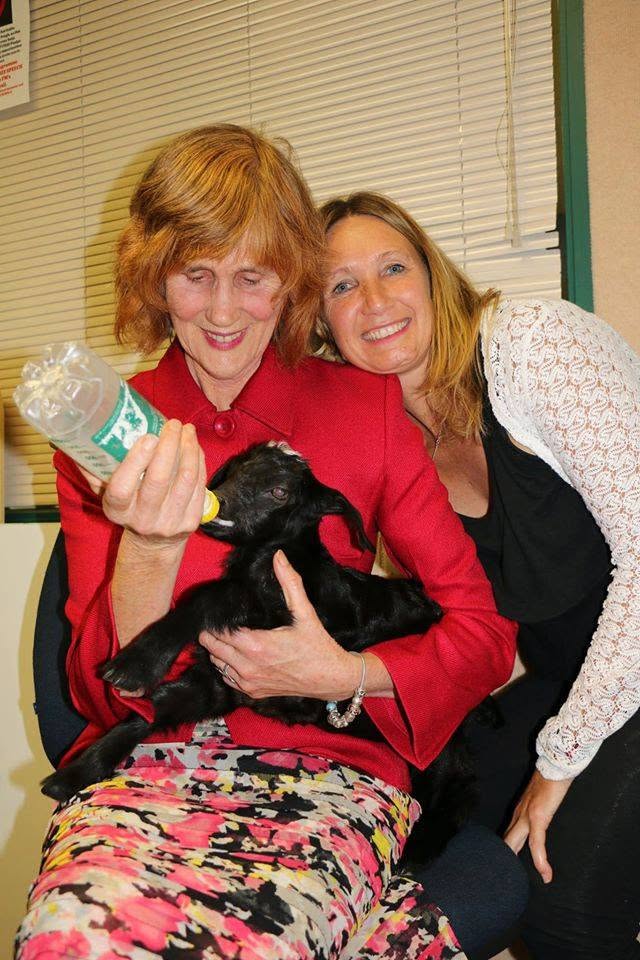
By Sandra Kyle and Lynley Tulloch
On the evening of 7 November, we watched the election results come in on the telly. Lynley had stood for the Animal Justice Party of Aotearoa NZ in Takanini, Auckland. Sandra was the party’s Whanganui candidate. Early on, it was clear our plucky little party would not get the result we had hoped for, in either the party or the electorate vote.
Disappointment was inevitable. For us, it was also brief.
We would have loved a better result. But for us, the AJP was never only about winning. It was about giving a political voice to the conviction that has shaped both our lives: that animals matter, that their suffering matters, and that how we treat other living beings reveals who we are as a society.
It is the same conviction that brought us together.
We met in the 2000s, in the Save Animals from Exploitation (SAFE) writers’ group. One morning, on her morning tea break, Sandra opened the newspaper and saw a photo of a man holding a revolver to the head of a gentle, trusting cow.
Sandra “I panicked. The photo shocked me to the core. Violence against animals was so ordinary that it could be emblazened on the front page of a national newspaper! I ran to my computer and poured my heart out in an email to our writers’ circle. Almost immediately, Lynley replied, and as I read her wise, encouraging words I could feel myself calming down.
“We bonded from that moment on. It was the days before social media, so although Lynley was in Hamilton and I was in Auckland, we stayed in touch by email and phone. We wrote opinion pieces together. There were very few animal rights articles in the national media back then, and we began to be noticed. Mainstream journalists got in touch. When Lynley was awarded her PhD, it lent our writing partnership even more credibility.
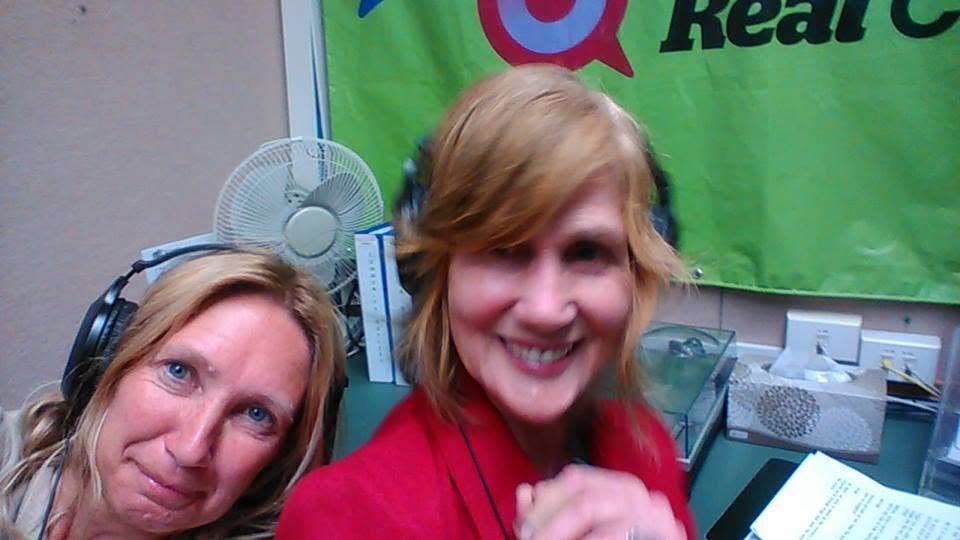
“When I retired and moved to the Waikato, I started an animal rights show on the local Access radio station, that I called Safe and Sound. I asked Lynley to co-host, with our friend Paul Judge as a guest host. It wasn’t long before our ratings climbed and the show was a finalist in the 2018 New Zealand Radio Awards.”
Lynley: “Our paths have taken us to different parts of the world, but we have seen the same thing everywhere: animals fighting to survive in circumstances created, or made worse, by human actions driven by globalised capitalism.
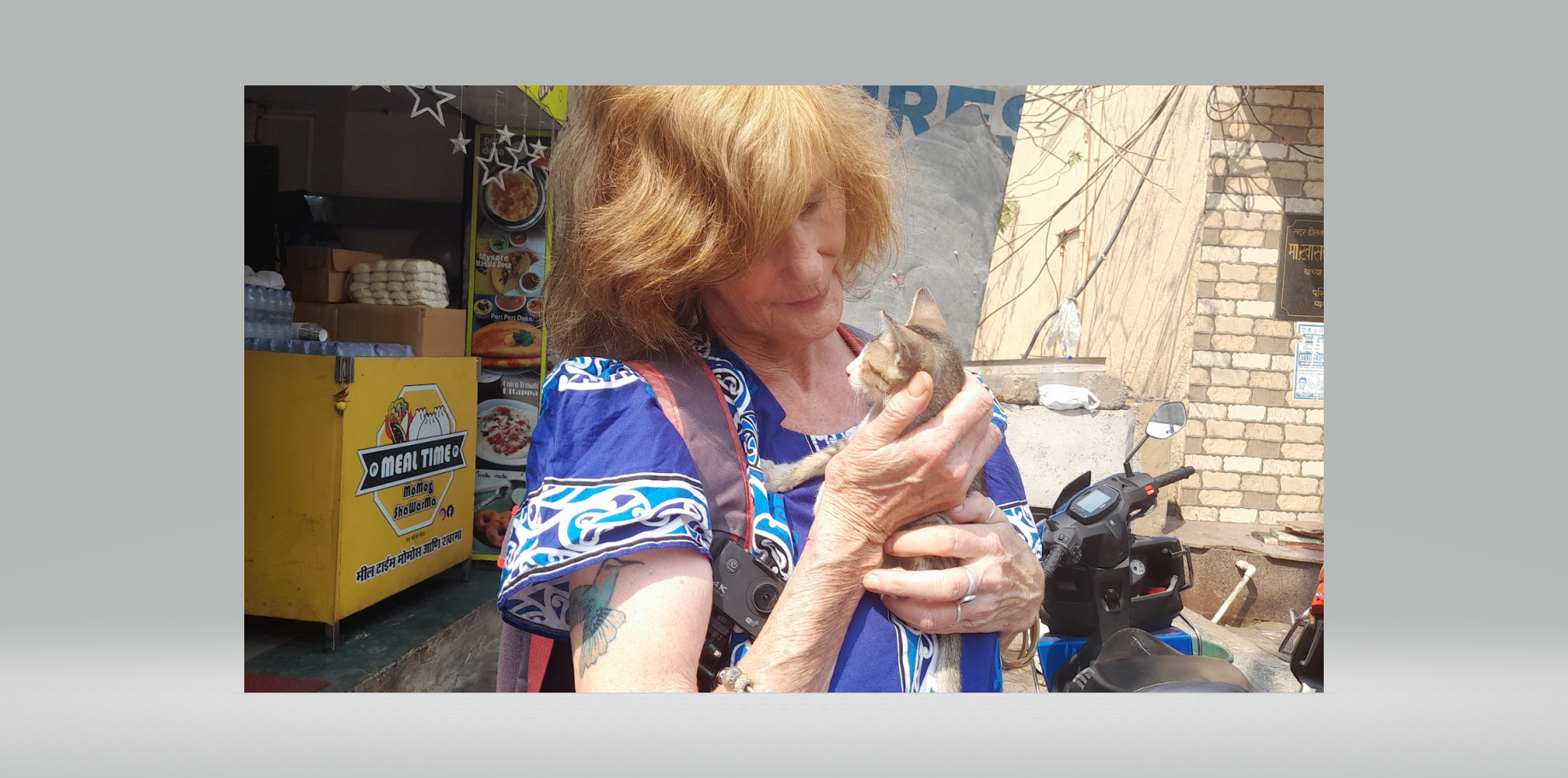
“Sandra regularly bears witness to animals arriving at slaughterhouses as part of the Save Movement. She has travelled widely in India, supporting street animals and their feeders and rescuers, and her charity supports some of the most unfortunate animals in the world. She has written about it in her book Pawprints on My Heart.
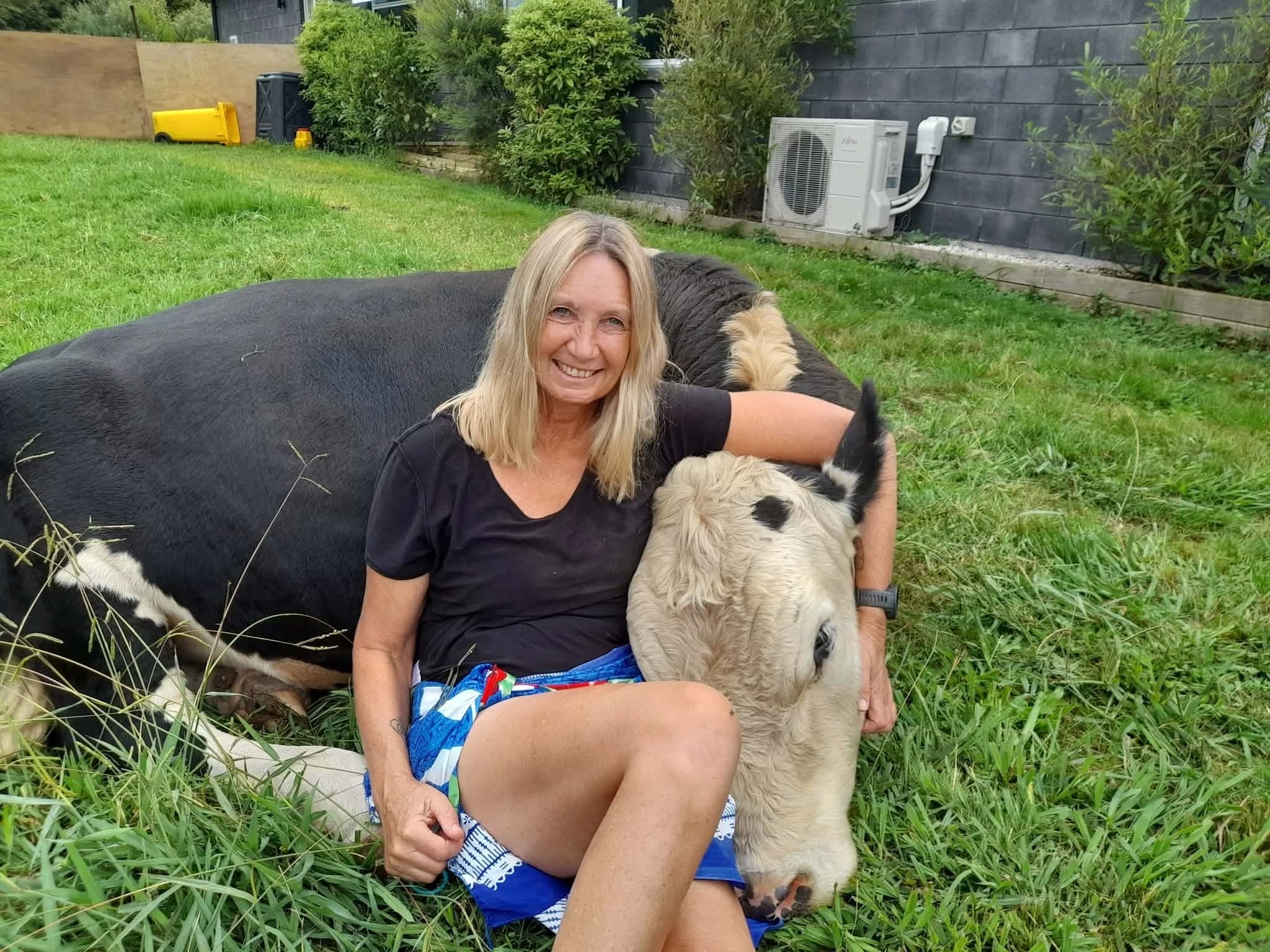
“For me, the horror began in childhood: days-old bobby calves standing in boxes by the roadside in the cold, waiting to be collected and killed. Torn from their mothers and treated as surplus to the demands of milk production, their cries haunted me. That horror lodged in my bones for decades, until I founded a rescue organisation for bobby calves and could make a difference, however small. My time in Indonesia, where I partly grew up, and later in Tonga, deepened my resolve to make this a better world for animals.
“Between the two of us, we have held dying animals in our hands, animals who could not be saved despite everything we did. We know only too well that particular sorrow and helplessness. Every one of these animals became part of us, and they are part of us still.”
Perhaps this is where hope means the most.
Hope is not a wish. It is a practice. It lives in everyday acts of compassion and courage: in the person who stops for an injured animal that everyone else walked past, in the frightened calf given a chance to live, in those who continually show up at slaughterhouses, laboratories and racetracks to challenge cruelty that has become perfectly socially acceptable.
Hope also demands clarity about where we draw the line. Ours is this: animals are not commodities for human profit. We want to see an end to all animal exploitation. We want a just transition away from animal agriculture to a diverse, plant-based economy that supports communities while respecting the lives of other animals and the ecosystems we share. We are not about improving welfare inside a broken system. It is about transforming our relationship with the living world.
We know this challenges powerful economic interests and deeply rooted traditions. We know that speaking for animals can bring ridicule, sarcasm and hostility, sometimes from those closest to us. But must compassion win majority approval before it is morally legitimate?
Hope does not ask us to look away. There is a heaviness in holding immense animal suffering alongside the loss of wild species and their habitats. We carry that heaviness, while still believing another world is possible. But hope and realism are not opposites. Hope is what lets us act in the face of what we refuse to accept.
Neither of us began caring about animals because of an election, and neither of us will stop because of its outcome. Whether we received one vote or ten thousand, our commitment to animals would be the same. The very next day after the election, we were back at work.
Movements endure because people keep acting when progress is painfully slow. The animals we speak for do not know an election was lost. Their suffering did not ease when the votes were counted, and neither did our duty to them. The Animal Justice Party of Aotearoa NZ may be a small political movement, but the issues we raise, and the answers we propose, are enormous and transformational.
So, together with all of our exceptional colleagues in the AJP, we will keep caring. We will keep challenging injustice. We will keep working toward a world in which no animal is treated as expendable.
Hope is not something we wait for. It is something we do.

